Annona muricata L.
Common Name
Soursop, Graviola
Family
Araucariaceae
Origin & Distribution
Native to tropical regions of the Americas, particularly the Caribbean and Central America. Now widely cultivated in West Africa, Southeast Asia, and other tropical areas for its large, flavorful fruit and medicinal value. In Nigeria, it is common in home gardens, farms, and botanical collections.
Conservation Status
Least Concern

Description
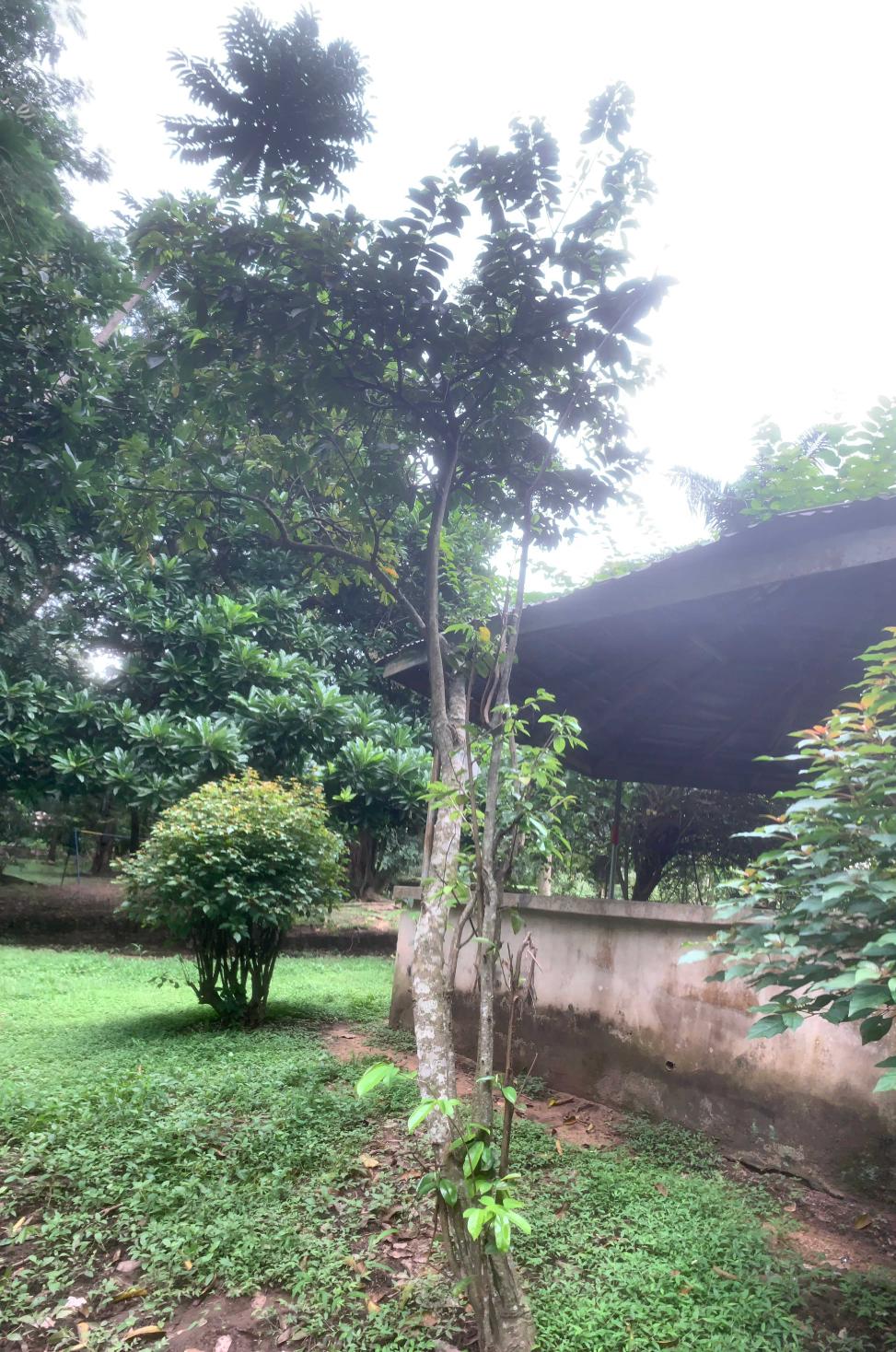
Small to medium-sized, evergreen tree, typically 4–8 m tall with an open, irregular canopy. Bark: Smooth, grey-brown, with occasional fissures in older trees. Leaves: Simple, oblong to elliptic, glossy dark green above, paler beneath, 6–20 cm long, with a leathery texture and strong aromatic scent when crushed. Flowers: Solitary or paired, large (4–6 cm), with thick yellow-green petals; borne on the trunk, branches, or twigs (cauliflory). Fruits: Large, oval to heart-shaped (15–30 cm long), weighing up to 2–4 kg; dark green skin covered with soft, curved spines; pulp is juicy, white, fibrous, with a sweet-tart flavour; contains numerous smooth, black seeds.
Ecological Information
Thrives in warm, humid climates with annual rainfall between 1,000–2,500 mm. Prefers well-drained sandy loam or loamy soils; intolerant of waterlogging. Pollinated mainly by beetles and small insects.
Uses & Importance
Food: The fruit is eaten fresh, juiced, or made into ice cream, jams, smoothies, and desserts. Medicinal: Leaves, bark, roots, and seeds are used in traditional medicine for anti-inflammatory, antimicrobial, and purported anticancer properties (note: seeds are toxic and should not be ingested raw). Agroforestry: Often intercropped with other fruit trees; provides shade and habitat for wildlife. Economic Value: High market demand for both fresh fruit and processed juice.
Tree Photos
Quick Info
- Scientific Name
- Annona muricata L.
- Family
- Araucariaceae
- Tree Code
- UI-BG-TS-036
- Conservation
- Least Concern