Lannea welwitschii (Hiern) Engl.
Common Name
Smooth-stemmed Lannea
Family
Anacardiaceae
Origin & Distribution
Native to tropical Africa, found from Senegal and Guinea eastward to Uganda, and southwards into Angola and Zambia. In Nigeria, it occurs widely in lowland rainforests and along riverine areas.
Conservation Status
Least Concern

Description
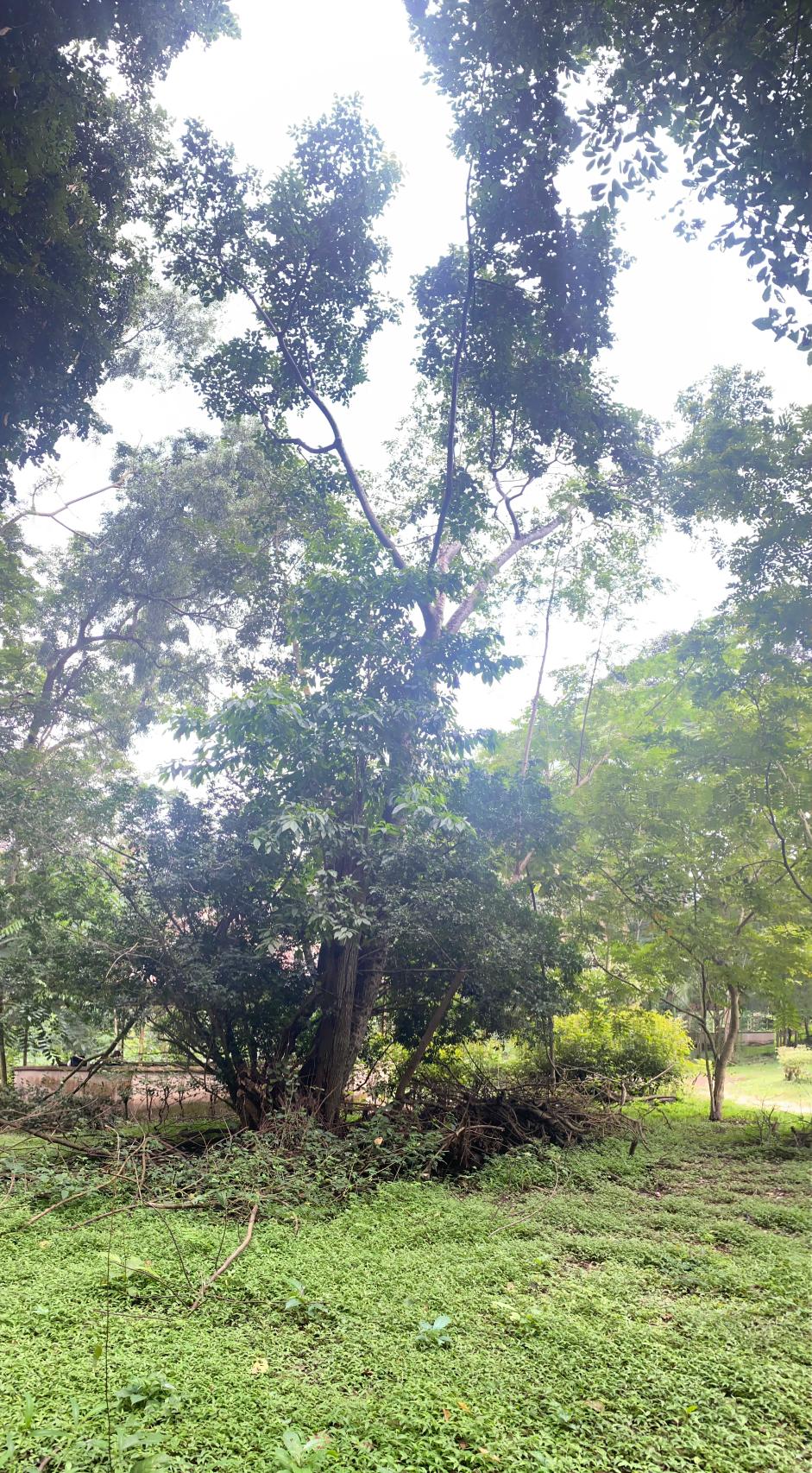
Large deciduous tree reaching heights of 20–35 meters, sometimes more. Trunk straight, cylindrical, with smooth, grey to pale-brown bark that may flake in patches, revealing a paler inner surface. Crown broad and spreading, often umbrella-shaped in mature trees. Leaves are pinnate with 5–7 pairs of opposite leaflets, each leaflet oblong to elliptic, leathery, and dark green above. Flowers small, greenish-white, in dense axillary panicles. Fruits are ellipsoid drupes, fleshy, yellow to reddish-brown when ripe.
Ecological Information
Thrives in moist, well-drained soils in lowland tropical forests. Tolerates seasonal flooding in riparian zones. Leaf fall usually occurs during the dry season, with rapid flushing of new leaves before or during flowering.
Uses & Importance
Wood is light to moderately heavy, used for furniture, interior joinery, plywood, and general construction. Bark exudates are sometimes used traditionally as chewing gum or in herbal medicine. Fruits edible when ripe, though more commonly eaten by wildlife. Leaves may be browsed by livestock.
Tree Photos

Quick Info
- Scientific Name
- Lannea welwitschii (Hiern) Engl.
- Family
- Anacardiaceae
- Tree Code
- UI-BG-TS-010
- Conservation
- Least Concern